- Published on
A Practical Guide to Peer Code Review
- Authors

- Name
- Gabriel
- @gabriel__xyz
So, what exactly is a peer code review?
Think of it as a collaborative editing session for your code. Before a new piece of software gets merged into the main project, other developers on the team take a look. They examine the source code, offer feedback, and work together to improve its quality, hunt down bugs, and share knowledge.
It’s less of a critique and more of a conversation.
Why Peer Code Review Is a Game Changer

Imagine a novelist publishing a book without ever letting an editor see it. You can bet typos, plot holes, and clunky sentences would slip through, hurting the final story. Peer code review is that essential editing step for software development. It acts as a critical quality gate, turning individual code contributions into a product that's cohesive, reliable, and easy to maintain down the road.
At its heart, this process is a dialogue, not a judgment. It gives developers a structured way to learn from each other, agree on best practices, and catch mistakes when they’re cheapest to fix—long before they ever affect a user. It’s your team's first line of defense against bugs and security flaws.
A Pillar of High-Performing Teams
Modern engineering teams don’t see peer reviews as optional; they’re a fundamental part of the workflow. The benefits go way beyond just catching mistakes. A consistent review process fosters a culture of shared ownership, where everyone on the team feels responsible for the quality of the codebase.
This collaborative approach has a few huge advantages:
*   **Knowledge Sharing:** Junior developers get to see how seniors solve complex problems, while seniors get fresh perspectives on new tools and techniques. It’s a fantastic way to cross-pollinate skills across the team.
*   **Enforcing Standards:** Reviews are the perfect place to ensure all new code follows the team's established style guides and architectural patterns. The result? A more consistent and predictable codebase.
*   **Reducing Project Risk:** Simply having a second pair of eyes on every change dramatically lowers the chances of introducing a critical bug or a system-wide design flaw.
A peer code review is really an investment in your team and your product. You trade a little bit of time upfront for a massive return in quality, stability, and team cohesion later on.
The Foundation of Modern Workflows
This practice is the engine that powers popular development models, especially the pull request workflow. For any team using a platform like GitHub, getting this flow right is non-negotiable for effective collaboration. If you want to dive deeper, check out our guide to the GitHub pull request workflow.
Ultimately, building a strong review culture is one of the single most impactful things a team can do to level up its engineering standards.
The Business Case for Code Reviews
It’s easy for developers to see the technical value of peer code reviews, but their real power is the direct, positive impact they have on the bottom line. Treating code review as just another step in the development process is a huge missed opportunity. When you frame it as a strategic investment, you start to see how it drives financial stability, product quality, and a real competitive edge.
The most obvious win is catching bugs early. A bug found during a review is usually a simple, quick fix. But if that same bug slips into production, it can cost up to 100 times more to fix. That number accounts for everything from customer support calls and emergency patches to the lasting damage done to your brand's reputation.
This kind of proactive quality control helps you build a more resilient product, which leads directly to happier customers and better retention. When software is stable and reliable, users stick around, protecting a vital revenue stream.
Accelerating Team Growth and Innovation
Beyond just squashing bugs, a consistent peer code review process is an incredible engine for leveling up your team. It works like a built-in, continuous training program where junior developers learn directly from senior feedback, and seniors get exposed to fresh perspectives and new ideas. This shared learning cycle is far more effective and cheaper than formal training programs, and it dramatically speeds up how quickly new hires get up to speed.
This collaborative loop creates several key business advantages:
*   **Reduced Security Risks:** A second pair of eyes is often all it takes to spot a potential security vulnerability, like an SQL injection risk or improper data handling, before it can be exploited. Preventing even a single data breach can save a company from catastrophic financial and legal fallout.
*   **Lower Maintenance Costs:** Code that’s regularly reviewed is just cleaner, more readable, and easier to work with. This drastically cuts the long-term cost of maintenance and makes it cheaper and faster to add new features down the road.
*   **Increased Velocity:** It might sound counterintuitive, but spending time on reviews now saves way more time later. By heading off bugs and technical debt, teams spend less time firefighting and more time building new, value-driving features.
A disciplined review process isn't a bottleneck; it's a guardrail that allows your engineering team to move faster with confidence. It transforms code quality from a developer concern into a core business asset.
More and more companies are catching on. The global code review market was valued at around USD 3.5 billion in 2025, and it's projected to explode to USD 18 billion by 2033. This massive growth shows a clear trend: organizations everywhere now see this practice as essential for building a high-performing engineering culture. You can find more details on this trend in the code review market growth report on Future Data Stats.
At the end of the day, the time spent on reviews isn't a cost—it's a high-return investment in a more efficient, secure, and innovative future.
Choosing Your Code Review Approach
Not all code reviews are created equal. The right approach for your team hinges on your project's needs, company culture, and even where your developers are located. Think of it like choosing a tool from a toolbox—you wouldn't use a sledgehammer for a finishing nail. Matching the review style to the task is what separates a smooth process from a frustrating one.
There’s no single “best” way to do a peer code review. Instead, you have a spectrum of options, from real-time, side-by-side collaboration to more formal, asynchronous workflows. Each comes with its own set of pros and cons.
Making a conscious choice here is critical. The goal is to turn your review process into an engine for quality, not a source of friction that slows everyone down.
The Real-Time Synergy of Pair Programming
Pair programming is the most hands-on, synchronous form of code review out there. In this setup, two developers share one workstation. One person, the "driver," is actively writing code, while the other, the "navigator," watches, gives feedback, and keeps an eye on the bigger picture as it all unfolds.
What’s great about this is that it combines writing and reviewing into a single, continuous flow. The review happens as the code is written, so there’s zero delay waiting for someone to get to your pull request.
This approach really shines in a few key scenarios:
*   **Onboarding New Team Members:** It's an amazing way for a senior developer to mentor a junior, passing on best practices and tribal knowledge organically.
*   **Tackling Complex Problems:** When you're wrestling with a gnarly algorithm or a brand-new feature, two heads are almost always better than one.
*   **Spreading Knowledge:** It’s the perfect antidote to knowledge silos, ensuring more than one person understands how a critical piece of the system works.
The obvious downside? It requires the full attention of two developers at once, which can be inefficient for simple bug fixes or routine changes.
The Asynchronous Flexibility of Pull Requests
The pull request (or merge request) is easily the most common asynchronous model, made popular by platforms like GitHub and GitLab. The workflow is simple: a developer finishes their work on a separate branch and then opens a "pull request" to merge those changes into the main codebase.
That request acts as a formal invitation for teammates to review the code. Reviewers can then look over the changes on their own schedule, leaving comments, questions, and suggestions right on the relevant lines of code.
This asynchronous style is a massive win for distributed teams spread across different time zones. It allows for deep, thoughtful feedback without needing everyone to be online simultaneously.
The pull request model is a solid fit for most day-to-day development, from shipping new features to patching bugs. It also creates a valuable written record of discussions and decisions. But if you’re not careful, it can lead to long wait times, creating bottlenecks that bring your development cycle to a crawl.
This simple flowchart helps reframe the time spent on reviews. It’s not just a cost—it’s a strategic investment in quality.
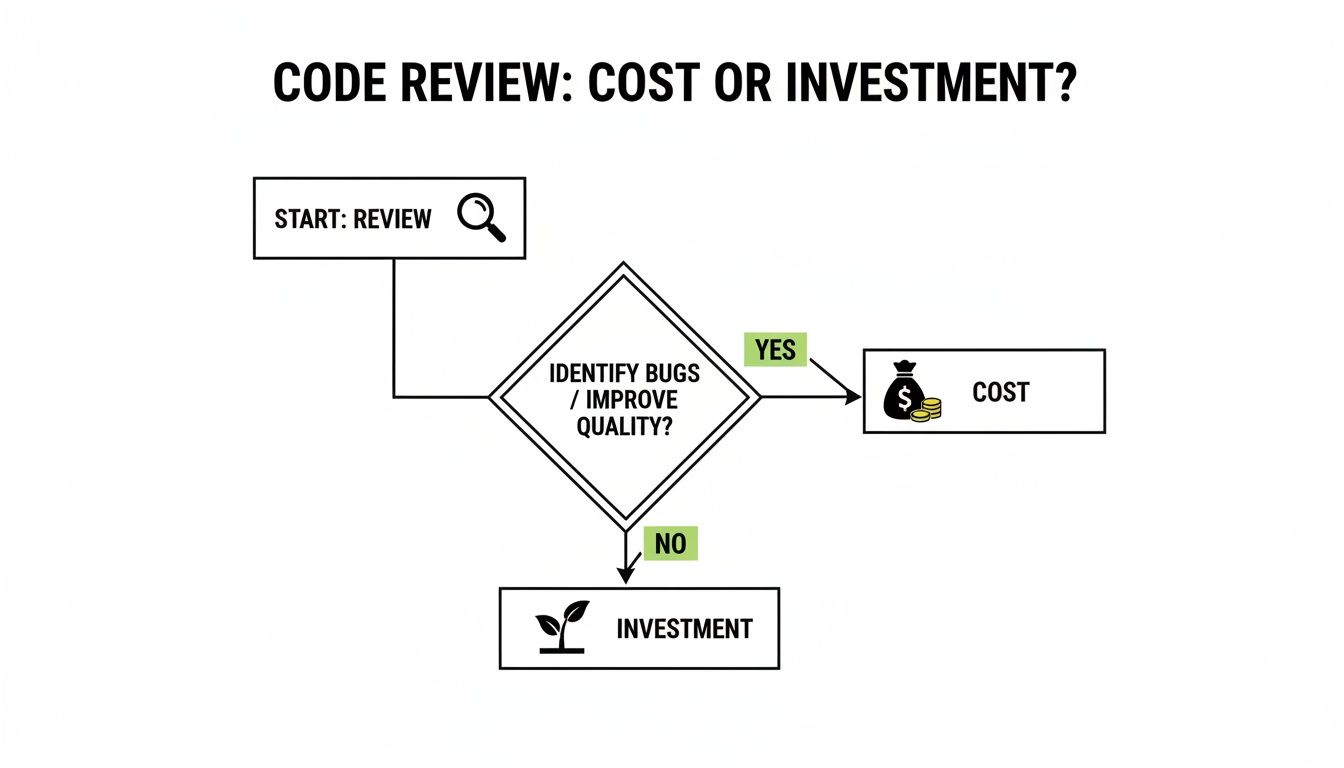
Ultimately, what this shows is that a proactive review process isn't just about catching mistakes. It's a direct investment in the long-term health and stability of your software.
The Rigor of Formal Inspections
On the far end of the spectrum, you’ll find formal inspections, sometimes called Fagan inspections. This is a heavyweight, highly disciplined process reserved for software where a single error could have catastrophic consequences—think aerospace, medical devices, or high-frequency trading systems.
The process involves a trained team where each person has a specific role (like author, moderator, or reader). They follow a rigid, multi-stage procedure that includes planning, overview meetings, individual preparation, and a formal meeting just to log defects. Afterward, there’s a follow-up phase to make sure every single issue has been resolved.
While incredibly effective at rooting out defects—some studies claim it can catch up to 90% of errors—it's also the most time-consuming and expensive method by a long shot. For most software teams building typical applications, the cost and overhead are just too high to be practical.
Comparing Peer Code Review Methodologies
Choosing the right code review methodology isn't a one-size-fits-all decision. It's about matching the process to your team's specific context—like your codebase's complexity, team distribution, and project goals. This table breaks down the three main approaches to help you see where each one shines.
| Methodology | Synchronicity | Best For | Pros | Cons |
|---|---|---|---|---|
| Pair Programming | Synchronous | Onboarding, complex problems, knowledge sharing | Instant feedback, high collaboration, fewer formal defects | Requires two developers' full time, can be intense, less efficient for simple tasks |
| Pull Requests | Asynchronous | Distributed teams, most day-to-day development, creating a documented record | Flexible for different time zones, allows for thoughtful review, creates a history | Can lead to long wait times, potential for context switching, risk of rubber-stamping |
| Formal Inspections | Both | Critical systems (aerospace, medical), projects where failure is not an option | Extremely high defect detection rate, highly structured and thorough | Very time-consuming, expensive, massive overhead, impractical for most teams |
Ultimately, many successful teams don't stick to just one method. They might use pair programming for a tricky new feature, rely on pull requests for daily tasks, and maybe—just maybe—bring in a more formal process for a critical security patch. The key is to be flexible and intentional about how you review code.
Implementing Effective Code Review Practices

A great peer code review is part technical skill, part human touch. Sure, you need a sharp eye for bugs, but the way feedback is delivered can turn a review from a frustrating bottleneck into a genuine growth opportunity. Getting this right means having clear guidelines for both the person writing the code and the one reviewing it.
The real goal here is to build a culture of psychological safety. When developers feel safe, they stop seeing reviews as a judgment and start seeing them as a chance to learn and improve together. This simple shift can transform the entire process from a chore into a collaborative activity that makes the code better.
This mindset is more important than ever. While over 55% of developers already do code reviews, the rise of AI coding assistants is shaking things up. Code churn—the rate at which code gets deleted or rewritten shortly after it's committed—is expected to double. That makes a solid, human-led review process absolutely critical for keeping quality high and technical debt low. You can read more about these trends in the latest developer ecosystem research from JetBrains.
Best Practices for Code Authors
As the author, your main job is to make life easier for your reviewer. A well-prepared pull request (PR) gets reviewed faster, receives better feedback, and gets approved quicker. It all boils down to setting your reviewer up for success.
First, keep your pull requests small and focused. A PR that touches thousands of lines across a dozen files is a nightmare to review effectively. Instead, break your work into logical, single-purpose chunks. A good rule of thumb? A PR should tackle just one specific ticket or bug.
Next, write a clear and descriptive summary. Don't just list the files you changed; explain the why. What problem are you solving? What was the old behavior, and what's the new one? If there are any visual changes, pop in some screenshots or GIFs to make the impact obvious.
A great pull request summary is like a map for your reviewer. It provides the context they need to navigate your changes confidently and focus on giving meaningful feedback, rather than trying to figure out what you were trying to accomplish.
Best Practices for Reviewers
As a reviewer, think of yourself as a guide, not a gatekeeper. Your feedback should be constructive, kind, and aimed at making the code better while helping your teammate grow. How you say something is just as important as what you say.
Always aim for specific, actionable feedback. Instead of "this is confusing," try something like, "this function name doesn't quite capture what it does. What if we renamed it to calculateUserTaxRate to be more explicit?" Always explain the reasoning behind your suggestions, and link to style guides or best practices when you can.
Here are a few principles to keep in mind:
*   **Ask Questions, Don't Make Demands:** Frame your feedback as a question. "Have you considered what might happen if this input is null?" is far more collaborative than "You need to handle null inputs here."
*   **Be Kind and Empathetic:** Remember there's a human on the other side of that screen. Acknowledge what they did well before diving into what could be improved. A simple "Great test coverage here!" can go a long way.
*   **Automate the Small Stuff:** Let linters and automated formatters catch stylistic issues like spacing or variable naming. That frees up the human review to focus on what really matters: logic, architecture, and potential bugs.
By following these guidelines, you help create a positive feedback loop. Authors learn how to submit better PRs, reviewers provide more impactful feedback, and the whole team ends up shipping higher-quality software.
Using Modern Tools to Streamline Your Workflow
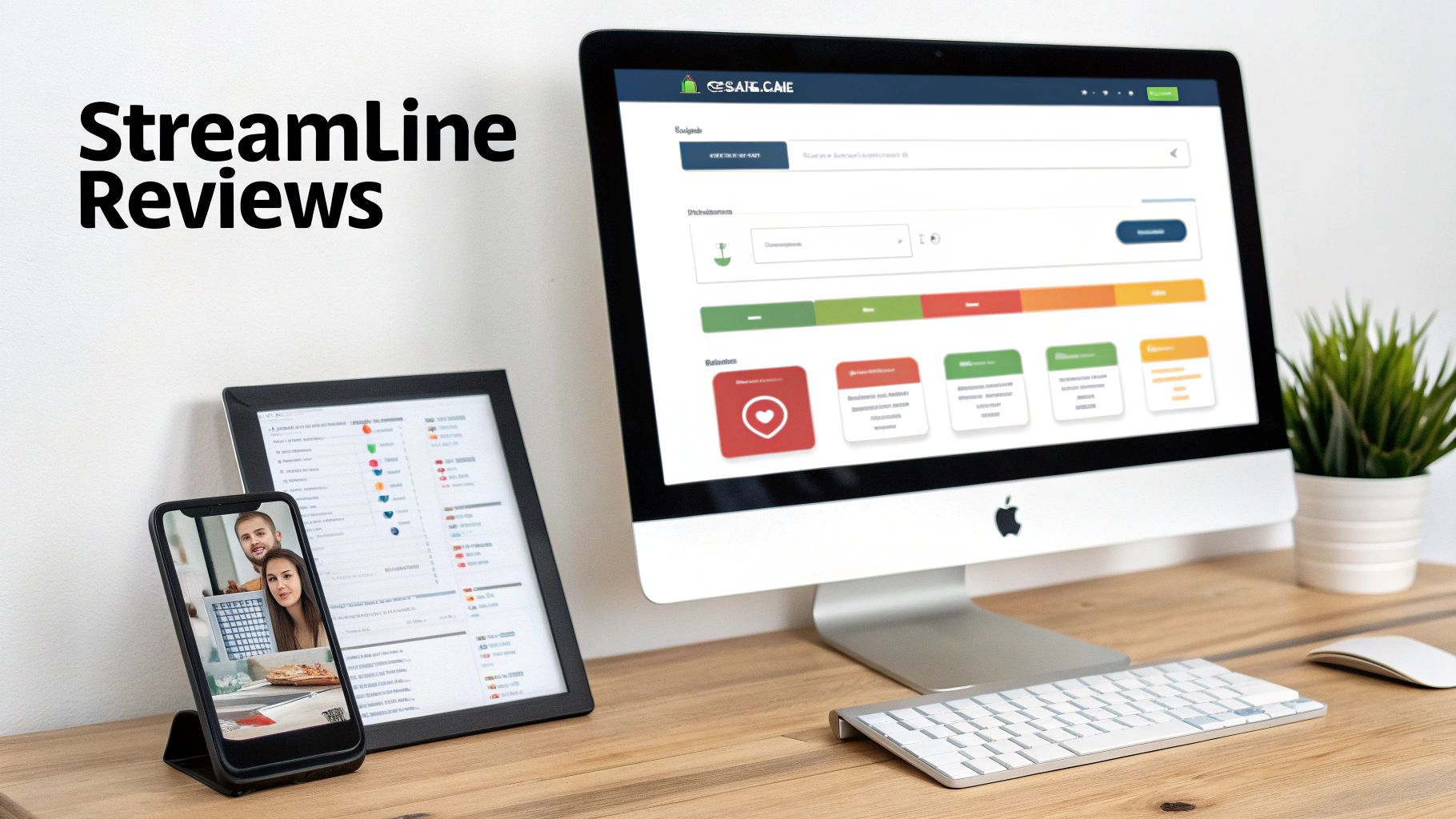
You can have the best peer code review process in the world, but it will fall flat if your workflow is clunky and inefficient. Solid processes are built on the back of great tools that cut out the friction and let developers get back to what they do best—writing and improving code.
The real challenge in modern development isn't getting people to want to review code; it's the constant notification fatigue, review bottlenecks, and confusion over who owns what. This is where smart automation becomes a game-changer, turning a messy process into a smooth, predictable one.
Taming Notification Chaos and Review Bottlenecks
Let’s be honest: the default notification systems in platforms like GitHub are just plain noisy. When every single comment, commit, and status change pings the entire team, developers learn to ignore everything. This "notification fatigue" is one of the biggest reasons for slow review cycles, as critical requests for a peer code review get buried in the noise.
The fallout from this is pretty serious:
*   **Delayed Feedback:** Pull requests sit untouched for days, blocking features and grinding the development pipeline to a halt.
*   **Reduced Focus:** Constant context-switching to check PR statuses kills deep work and tanks productivity.
*   **Frustrated Developers:** Authors feel stuck, and reviewers feel buried under a mountain of alerts.
The goal isn't to send more notifications. It's to send the right notifications to the right people at the right time. This turns alerts from background noise into actionable signals.
For distributed teams, finding the best asynchronous communication tools can be a huge boost to your peer review process by helping organize this flow of feedback.
Automating Review Assignments and Routing
Manually assigning reviewers is another classic bottleneck, especially on large teams or in sprawling monorepos where code ownership is all over the place. A developer might have no idea who the right person is to review their changes, leading to delays while they hunt down an expert.
Automation solves this by intelligently routing review requests based on rules you define.
Take a tool like PullNotifier, which plugs directly into GitHub and your team's chat hub, like Slack. Instead of blasting everyone with every update, it lets you build specific routing rules.
This screenshot shows how a tool can take a firehose of notifications and neatly organize them into a single, clean message thread.
By filtering and grouping these updates, the system makes sure developers only see what’s relevant to them, drastically cutting down on distractions.
Creating a Single Source of Truth
One of the biggest wins from using a dedicated tool is creating a central, real-time view of your team's entire review process. Instead of developers constantly jumping back to GitHub, a tool can push clean status updates right into a dedicated Slack channel.
Here’s what that looks like in action:
- PR Opened: A dev opens a pull request. The tool immediately posts a message in the right Slack channel, automatically tagging the correct reviewers based on the repo, file paths, or team assignments.
- Review in Progress: As reviewers drop comments or approve changes, the original Slack message is updated in a single thread. No more fragmented conversations.
- PR Merged: Once the PR is merged and closed, the Slack message gets a final update, giving everyone a clear signal that the work is done.
This workflow completely eliminates the need for manual status checks and those endless "any updates on this?" pings. By tying your version control system to your communication platform, you create a seamless, automated loop that keeps everyone in sync.
For teams ready to make this jump, checking out the 12 best automated code review tools for 2025 is a great place to start. With the right automation, you can make your peer code review process faster, smoother, and a whole lot less painful.
Measuring the Health of Your Review Process
You can't improve what you don't measure. Relying on "gut feelings" to figure out if your peer code review process is working is like driving without a map—you’re moving, but you have no idea if it’s in the right direction. A data-driven approach is the only way to find the hidden bottlenecks holding your team back.
To get there, engineering leaders need to track a few key metrics. These numbers give you a clear, objective story about your team's velocity, how they collaborate, and the quality of the code they’re shipping.
Key Metrics for a Healthy Code Review Cycle
When you monitor the right data, you can stop reacting to problems and start proactively improving your process. Instead of guessing where the delays are, you can pinpoint the exact stage in the review cycle that needs a tune-up.
Here are three of the most powerful metrics to get you started:
*   **Review Cycle Time:** This is the total time from when a pull request is opened until it’s finally merged. If this number is consistently high, it’s a huge red flag. It often points to overloaded reviewers, fuzzy ownership, or PRs that are just too massive to review efficiently.
*   **Review Coverage:** This metric simply tracks what percentage of code changes actually go through a review. While shooting for **100% coverage** is the goal, tracking this ensures nothing slips into production without a second pair of eyes, which is critical for maintaining quality.
*   **Defect Escape Rate:** This counts the number of bugs that pop up in production that really should have been caught during a review. A high escape rate is a sign that reviews might be too superficial or that reviewers just don’t have the context needed to spot those deeper logical flaws.
Tracking these metrics gives you a baseline for making real, continuous improvements. It turns subjective opinions about the process into hard data, making it way easier to justify changes and actually show their impact over time.
This data-first mindset isn't just a local trend; it's going global. While North America currently leads the code review market thanks to its tech infrastructure, Europe and Asia Pacific are catching up fast. The market in Asia Pacific, for instance, is expected to hit USD 578.998 million by 2033, which just goes to show how teams everywhere are using review data to get a leg up.
The metrics you pull from your code review process can feed directly into a broader software quality metrics dashboard, giving you a complete picture of your engineering health. For a deeper dive, check out our guide on key metrics for faster code reviews in GitHub. When you measure what matters, you give your team the power to build better software, faster.
Common Questions About Peer Code Review
Even with the best intentions, rolling out a smooth code review process always sparks a few questions. Getting straight answers to these common hurdles is key to refining your team's workflow and keeping everyone on the same page. Let's tackle some of the most frequent ones that pop up.
How Many Reviewers Should Be on a Pull Request?
The sweet spot is usually one or two primary reviewers. For a tiny, low-risk change—think a typo fix or a minor refactor—a single reviewer with the right context is often more than enough to keep things moving.
Bringing in a second set of eyes adds a valuable diversity of perspective without bogging things down. This is the ideal setup for most new features or bug fixes. The goal is to get the right expertise, not just to pile on more people. For truly mission-critical changes, you might loop in a third senior dev or a domain expert, but you have to be careful to avoid "review by committee," which can grind everything to a halt.
What Is the Ideal Size for a Pull Request?
Smaller is almost always better. A good rule of thumb is to aim for changes under 400 lines of code. Large pull requests are mentally draining to review properly, which dramatically increases the chances of reviewers missing bugs or subtle design flaws.
By breaking down large features into smaller, self-contained pull requests, you make the review process faster for everyone. This ensures feedback is more focused, effective, and easier to act upon. Each pull request should represent a single, logical unit of work.
Think of it this way: it’s much easier to edit a single chapter than an entire novel. A focused review is a better review.
How Should We Handle Disagreements in a Review?
Healthy debate is a sign of an engaged team, but the conversation has to stay constructive. The goal isn't to "win" an argument; it's to land on the best possible outcome for the project and the codebase.
To keep discussions positive and productive, a few simple guidelines go a long way:
*   **Frame feedback as questions.** Instead of making demands ("Change this now"), try asking questions ("What do you think about trying this approach instead?"). It feels collaborative, not confrontational.
*   **Know when to talk it out.** If a comment thread on a PR starts getting long or heated, just hop on a quick video call. A five-minute chat can resolve what might take an hour of back-and-forth typing.
*   **Default to a standard.** If the team can't reach a consensus on a stylistic issue, fall back on your established coding standards or let a designated tech lead make the final call. This takes personal opinion out of the equation and gives everyone a clear path forward.
Stop drowning in notification noise and start merging faster. PullNotifier integrates with GitHub and Slack to deliver smart, consolidated pull request updates, cutting through the clutter so your team can focus. Get started for free at PullNotifier.com and see why over 10,000 engineers trust us to streamline their code reviews.